
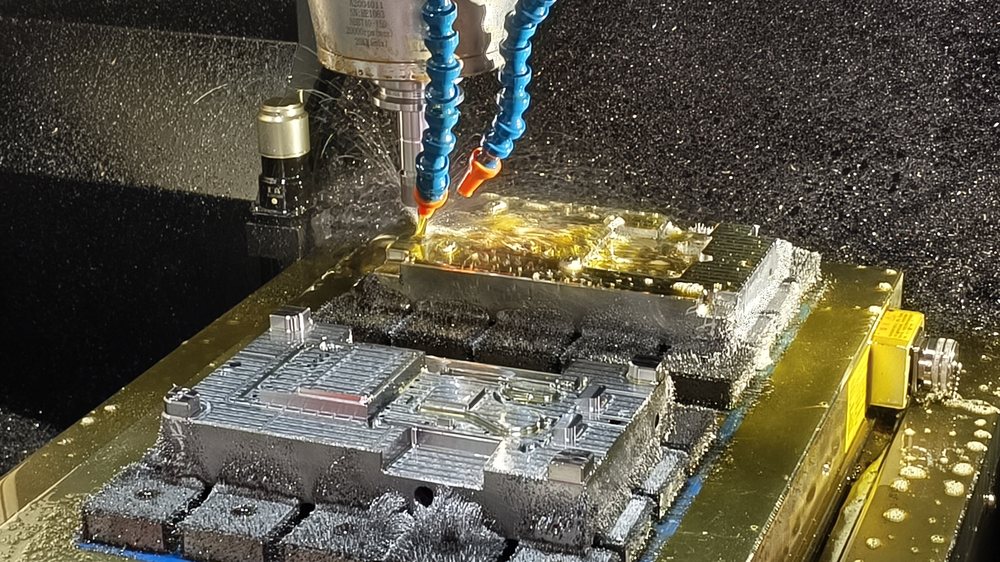
CNC machining for injection mold tooling turns a plastic product design into the steel or aluminum surfaces that shape every molded part. The process covers programming, milling, spark erosion, fitting, polishing, trial checks, and final validation before the mold can support repeatable production. For OEM plastic products, better CNC machining for injection mold tooling means cleaner geometry, fewer trial loops, and stronger control over the molding process.
How CNC Machining for Injection Mold Tooling Shapes Production
Injection mold tooling is not just a block of metal with a cavity inside. It controls resin flow, cooling behavior, parting line quality, ejection movement, surface finish, and the final dimensions of the plastic part.
CNC machining for injection mold tooling is the stage where design intent becomes controlled metal geometry. If the cavity, core, inserts, sliders, or lifters are not machined accurately, the molding process may struggle even if the plastic part design looks correct.
Maidder's tooling capability includes an in-house tool room, high-speed CNC milling, spark erosion, aluminum prototype tooling, P20 tools, fully hardened multi-cavity tools, and valve gate hot runner systems. That makes the tooling process easier to coordinate with molding and inspection needs.
From Product Design to Tooling Strategy
Tooling strategy begins with the molded part's function. A housing, latch, cooler component, food-contact part, or technical plastic component each brings different expectations for appearance, durability, wall structure, assembly fit, and cycle stability.
Before machining begins, the engineering team should understand gate location, shrinkage behavior, draft, steel-safe areas, surface requirements, and any geometry that may need EDM or separate inserts. This planning reduces the chance that a mold must be repeatedly corrected after trial.
Prototype Tools for Early Validation
Prototype tooling is useful when a project needs real molded samples before committing to a hardened production tool. Aluminum single-impression tools can support early validation of part geometry, assembly feel, material behavior, and customer-facing surfaces.
The goal is not to make the cheapest tool; it is to learn enough from real molding to make the next decision with confidence. Prototype tools help product teams identify risk while changes are still easier to make.
P20 and Fully Hardened Production Tools
P20 tools and fully hardened multi-cavity tools are used when the project needs more durable production capability. The decision depends on expected volume, part complexity, material behavior, surface expectations, and how many cavities the production plan requires.
Maidder's tooling range allows the process to move from early validation to stronger production tooling without disconnecting design feedback from mold manufacturing. That continuity matters when the same feature must remain stable across development, trial, and production.
Milling, Spark Erosion, and Mold Fitting
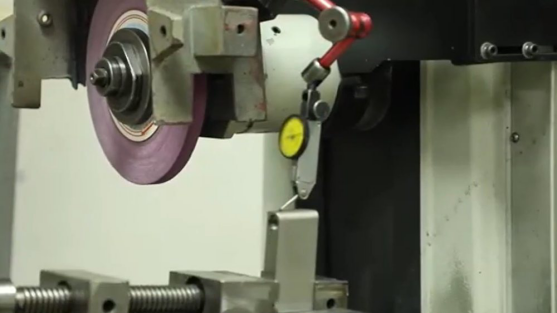
CNC milling removes material from steel or aluminum to create cavity surfaces, mold plates, inserts, and other tooling features. Accurate programming and controlled cutting conditions affect surface finish, cutting time, and the final tolerance of the mold component.
Spark erosion, also called EDM, is valuable when a feature is too deep, narrow, sharp, or complex for standard milling. It can create details that support ribs, corners, textured zones, and other geometry that would be difficult to machine with a cutting tool alone.
After machining, fitting brings the mold components together. Parting line contact, insert seating, slider movement, lifter travel, ejector action, and shutoff areas all need careful checks before the tool is ready for a serious molding trial.
Why Tooling Accuracy Affects Molding Stability
Tooling accuracy influences every shot. Flash may result due to small differences at the parting line; venting problems may lead to air entrapment; cavitation differences may influence shrinking; and faulty ejection may cause marks.
This is why CNC machining for injection mold tooling should be treated as part of the molding process, not a separate metalworking step. The better the tool controls cavity shape, cooling, and release, the easier it is for the molding team to hold a stable process window.
Maidder also supports moulding with low-to-high volume production, robots and automation, vertical moulding for inserts, two-shot moulding, foaming-related injection molding, assembly, packing, and ultrasonic welding. Tooling decisions can therefore be checked against the real production route instead of staying isolated in the tool room.
Quality Checks After Mold Machining
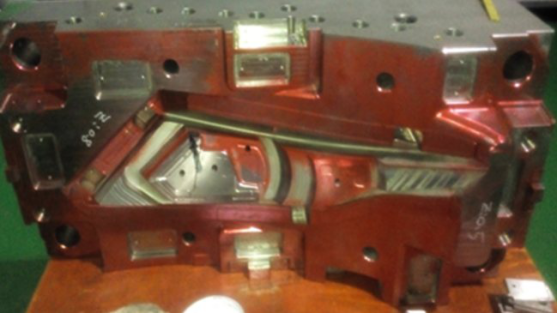
Once mold components are machined and fitted, inspection helps confirm whether the tool is ready for trial and production development. Important checks include cavity dimensions, shutoff surfaces, insert positions, moving component behavior, and the features that shape critical part dimensions.
Maidder uses CMM, optical measuring equipment, Minitab, functional and dimensional assessment, APQP, MSA, FMEA, PPAP, in-process testing, batch traceability, and production control. These tools help connect mold accuracy with the quality of the molded plastic part.
Quality checks should also look beyond the tool itself. If the molded sample shows sink, warpage, flash, weak surface finish, or poor assembly fit, the team must decide whether the cause is tooling geometry, resin behavior, machine settings, cooling, or part design.
Where CNC Machining Supports Different Plastic Products
Outdoor products such as hard cooler components often need strong shell geometry, accurate closure features, and dependable assembly points. Electronics housings may need clean surfaces, precise bosses, and stable openings for screws, clips, or interfaces.
Food-contact parts and technical plastic components place extra focus on surface quality, material suitability, and consistent production. In each case, CNC machining for injection mold tooling shapes the repeatability that the molded part depends on.
Maidder's CNC machining service also supports precision-machined plastics for technical plastic components and small production runs without the need for tooling. This gives development teams another route when they need early functional parts before injection mold investment.
Choosing a Tooling Partner for Process Control
An ideal tool partner needs to appreciate the effect of machining decisions on mold, assembly and inspection processes. Good questions go beyond cavity numbers or steel types and have to focus on trial, measurement, adjustments and maintenance of the tool during manufacturing.
Maidder fits projects where the buyer wants the tooling process to stay connected to molding and finished-part requirements. That is valuable for custom plastic parts because a tool is only successful when it supports stable production, not just when it is finished on schedule.
Conclusion
The CNC machining process of the injection mold tooling is one of the most significant processes in the manufacture of plastic products due to its definition of surface, motion, and repeat of each and every part that will be molded. When the various processes are well coordinated, production becomes more predictable.
Maidder combines tooling, molding, assembly, CNC machining, and quality control to support custom plastic products from early validation to production-ready molds.
Connect with Maidder when your next project needs CNC machining for injection mold tooling that keeps product design and manufacturing reality aligned.
FAQ
Q: What is CNC machining for injection mold tooling?
A: In the CNC machining process for injection mold tooling, computerized machinery is utilized to cut the various parts of the mold, including plates, cavities, cores, inserts, and many more. This translates the product design and the mold design from the 3D form to actual mold surface areas.
Q: Why is spark erosion used in mold manufacturing?
A: Spark erosion, or EDM, is useful for deep, narrow, sharp, or complex mold features that are difficult to create with milling tools. It helps form precise details inside cavities and inserts, especially where geometry or access limits standard cutting.
Q: When should a project use prototype tooling?
A: Prototype tooling may be beneficial in situations where a group requires molds for testing purposes. Prototype tooling allows one to evaluate fit, function, material performance, or assembly without having to rely on production tooling.
Q: How does mold tooling accuracy affect injection molded parts?
A: Accuracy of mold tooling influences dimensional tolerance, flashing, surface finish, cooling, ejection, and fit during assembly. In cases where the geometry of the mold tool is not stable or the fit is poor, additional corrections may be required during the molding process.
