

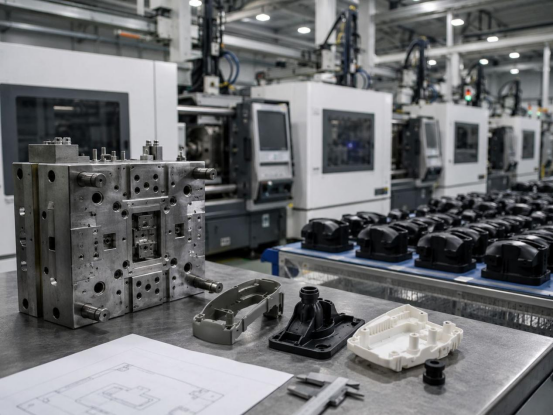
The transition from a successful prototype to a scalable mass production run is often where many plastic injection molding projects face significant technical hurdles. Ensuring a seamless transition requires a rigorous engineering review process knownas design for manufacturability injection molding. This methodology bridges the gap between creative industrial design and the physical realities of high-volume manufacturing.
Why is a Data-Driven Moldability Analysis the First Step to Quality?
Starting any tooling project without a comprehensive moldability analysis is a gamble with project budgets and timelines. This early-stage assessment uses advanced software simulations to predict how molten resin will flow through the mold cavity.
Identifying Potential Cosmetic and Structural Defects
A professional moldability analysis identifies high-risk areas prone to common injection molding defects. These include:
· Sink marks and surface sinking caused by uneven wall thickness or improper cooling.
· Weld lines at the confluence of molten material streams, which can compromise both aesthetics and structural integrity.
· Air entrapment or silver streaks resulting from volatile substances or excessive shearing during the fill phase.
· Potential warping deformation due to uneven cooling or the release of internal stresses.
By simulating gate locations and cooling efficiency through moldflow, engineering teams can optimize the part geometry to ensure the final product meets strict quality standards.
Ensuring Tolerance Consistency Through Simulation
Precision machining of plastic requires tight tolerances that must be maintained throughout thousands of cycles. Data-driven analysis provides the necessary evidence to adjust wall thicknesses or add draft angles before the custom injection mold design is finalized. This level of foresight prevents the need for major steel removals later in the process.
How Does Custom Injection Mold Design Balance Precision and Budget?
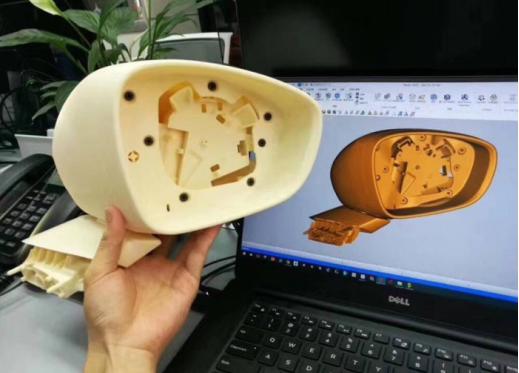
Achieving high-performance results requires a custom injection mold design that aligns resin properties with the appropriate tooling logic. Material selection is the foundation of this balance. After completing the DFM review stage, the next critical step is transforming optimized designs into reliable tooling solutions. Learn more about OEM/ODM tooling and molding process.
Selecting Materials Based on Mechanical and Thermal Requirements
Choosing the right resin involves evaluating strength, durability, and appearance. Common considerations include:
· Linear low-density polyethylene (LLDPE) for rotomolding-style toughness in injection-molded outer shells.
· PU Foam density for insulation layers in cooler-related projects.
· Heat resistance and impact resistance for automotive or medical structural components.
The choice of material dictates the steel type and the complexity of the mold's cooling system, directly impacting the total tooling investment.
Choosing Tooling Logic for Maximum Return on Investment
Custom injection mold design must consider the projected volume and part complexity. Decisions often involve choosing between several advanced options:
· Multi-cavity molds for high-volume efficiency.
· 2K injection molds for integrated multi-color or multi-material parts.
· Auto-unscrewing molds for components with complex internal threads.
· Collapsible core or gas-assisted molds for specialized geometries.
Maidder utilizes 20 years of engineering experience to recommend the most cost-effective tooling structure that ensures long-term production stability without over-engineering the solution.
What Makes a Plastic Part DFM Report More Than Just a Document?
In demanding industries like medical device manufacturing and automotive engineering, a plastic part DFM report serves as a technical contract and a professional defense against production failure. It is not merely a formality but a detailed roadmap for manufacturing success.
Learning from Engineering Change Notification (ECN) Management
For instance, in a project involving an HP printer base, a comprehensive review of modification areas across multiple revisions was essential for success. The project involved:
· Intelligent steel removal logic on yellow areas of the cavity inserts.
· Laser welding of core inserts to accommodate geometry changes without compromising tool life.
· Managing complex features such as lifters and sub-inserts to solve undercut issues.
By providing a detailed plastic part DFM report, potential engineering changes are managed systematically.
Moving from Technical Feedback to Process Optimization
The report should go beyond stating what is possible; it should provide actionable insights on how to make the part better. This includes proposing reverse drafts for easier cavity release or adjusting parting lines by as little as 0.5mm to ensure part quality. These micro-adjustments, documented in the DFM phase, prevent macro-failures during mass production.
How to Use DFM Injection Molding to Accelerate Your Product Launch?

In the current global market, lead time and response speed are critical competitive advantages. Integrating DFM injection molding into the early development phase significantly reduces the total time to market.
Reducing Iterations Between 3D Models and T1 Samples
The primary goal of early engineering involvement is to reduce the number of iterations required between the initial 3D model and the T1 sample. A thorough review of part geometry for manufacturing ensures that the first samples off the tool are as close to the final specification as possible. This efficiency is supported by a 24-hour technical feedback loop, ensuring that design questions are answered immediately.
Enhancing Supply Chain Efficiency Through One-Stop Engineering
Efficiency is also gained by utilizing a supplier that manages the entire lifecycle of the product. From initial concept and 3D modeling to mold manufacturing and final assembly, a unified engineering structure minimizes the risk of communication errors. Maidder implements a rigorous process to ensure that every stage of production aligns with the original schedule requirements.
Why Does China Engineering Plus Southeast Asia Capacity Provide Supply Chain Flexibility?
Global manufacturing trends are shifting toward supply chain resilience. A "China + 1" strategy allows brands to leverage high-end engineering expertise while benefiting from diverse production locations.
Maintaining Technical Excellence with Regional Scalability
Developing complex projects requires deep technical knowledge often found in specialized hubs like Dongguan. By keeping the design for manufacturability and injection molding expertise centralized, brands can ensure consistency as they scale production across different regions.
One-Stop Services from Design to Dispatch
A robust global layout offers flexibility in manufacturing processes:
· Dongguan R&D centers handle complex tooling, CNC machining, and mold flow analysis.
· Cambodian facilities provide capacity for high-volume injection molding, blow molding, and assembly.
· Integrated secondary operations such as 2-color printing, foaming, and ultrasonic welding streamline the final delivery.
This one-stop service model ensures that quality standards remain consistent, whether the product is being assembled in China or Southeast Asia, providing the ultimate supply chain elasticity.
Conclusion
The successful execution of a plastic injection molding project depends on the quality of the decisions made before the steel is cut. Utilizing a comprehensive checklist based on design for manufacturability injection molding principles is the most effective way to eliminate technical risks and control costs. From data-driven moldability analysis to the strategic layout of global production, every step must be guided by engineering excellence. Partnering with a supplier that offers 20 years of technical expertise and a proven history of managing DFM processes ensures that your project moves smoothly from concept to millions of successful parts.
Please contact us to receive a professional consultation for your next injection molding project.
FAQ
Q: Why is moldability analysis essential for my plastic project?
A: A moldability analysis is critical because it uses software simulations to predict potential defects like sink marks, weld lines, and warping before tooling begins. This allows for geometry optimizations that prevent expensive mold reworks and ensures the final plastic part meets all aesthetic and structural requirements.
Q: How does custom injection mold design affect my overall production cost?
A: Custom injection mold design balances precision with your budget by selecting the most efficient tooling logic for your volume.
Q: What should I look for in a professional plastic part DFM report?
A: A professional plastic part DFM report should include detailed assessments of draft angles, wall thickness consistency, gate locations, and parting lines. It serves as a technical roadmap, documenting engineering suggestions that optimize the part for mass production and prevent future manufacturing errors.
Q: Can DFM injection molding help reduce my product's time to market?
A: Yes, integrating DFM injection molding early in the design phase significantly reduces lead times by minimizing the iterations between the 3D model and the T1 sample. Faster technical feedback and early optimization of part geometry ensure that the project moves quickly and accurately toward mass production.
