

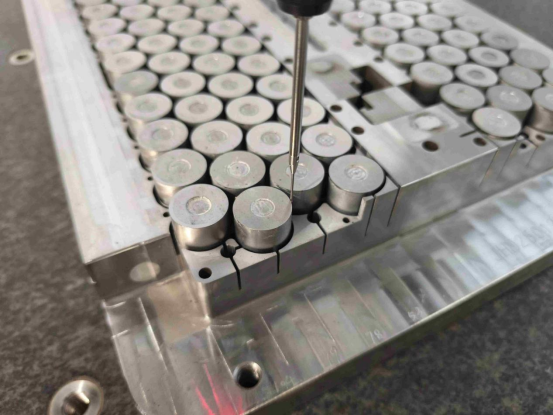
Selecting the appropriate export mold standards is a critical decision that influences the long-term success of global manufacturing projects. When producing high-precision parts in one region to be run in another, the compatibility of injection mold standards determines how easily the equipment can be maintained, repaired, and integrated into local production lines. For many international clients, the choice typically narrows down to two dominant systems: DME and HASCO. Both provide comprehensive frameworks for tooling standards, yet they serve different regional preferences and technical philosophies.
Understanding DME Standard Mold Tooling for North American Markets
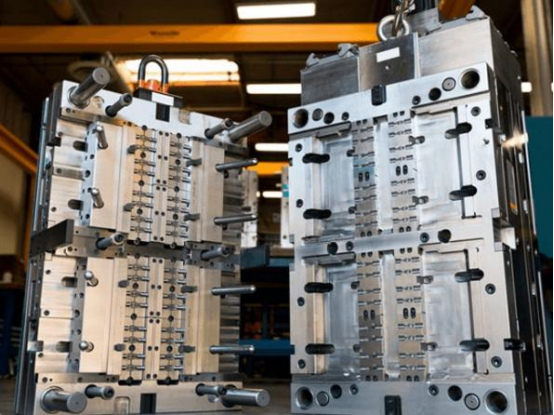
In the landscape of global manufacturing, DME standard mold tooling has established itself as the primary benchmark for the North American market. Developed originally in the United States, this system is built upon imperial measurements, which remains the default requirement for many facilities across the USA and Canada. Utilizing DME tooling ensures that the end-user can easily source replacement parts without navigating the complexities of unit conversion or specialized international shipping.
Why Imperial Measurements Define DME Tooling
The cornerstone of the DME system is its adherence to inch-based dimensions. For facilities operating in North America, having access to DME standard mold tooling means that every bolt, leader pin, and cooling fitting follows the local imperial standard. This alignment reduces the risk of mechanical errors during maintenance cycles. When a mold arrives at a facility in the Midwest or Ontario, the technicians can use standard local tools and off-the-shelf components to keep the production line running.
Critical Mold Components in the DME Library
The DME ecosystem offers a vast array of standardized mold components designed for durability and ease of replacement. These include:
· Standardized mold bases and plates.
· Imperial ejector pins and sleeves.
· Specialized leader pins and bushings.
· Standardized cooling connectors and plugs.
By adhering to these tooling standards, Maidder ensures that clients in the Western hemisphere receive equipment that is fully serviceable within their domestic supply chain, minimizing downtime.
Exploring HASCO Standard Mold Tooling for European Precision
While DME dominates the West, HASCO standard mold tooling is the undisputed leader in Europe and much of Asia. Founded in Germany, the HASCO system pioneered the concept of modular mold construction using metric measurements. It is widely regarded for its extreme precision and a high degree of interchangeability that has set the bar for modern injection mold standards.
Metric Accuracy and HASCO Tooling Standards
The primary advantage of HASCO tooling is its strict adherence to metric dimensions, which is the global standard outside of North America. European manufacturers prefer HASCO standard mold tooling because it offers a highly logical, modular approach to mold design. The precision of these tooling standards allows for complex multi-cavity molds to be assembled with minimal manual adjustment. This is particularly vital in industries requiring technical injection moulding where tolerances are measured in microns.
Simplifying Maintenance with HASCO Standard Mold Tooling
Global interchangeability is a core strength of the HASCO brand. Because HASCO standard mold tooling is used so widely across Europe, the Middle East, and Asia, a mold built to these export mold standards can be serviced in almost any country outside of the US. Replacing critical mold components like hot runner nozzles or specialized guide pillars becomes a straightforward process of ordering by a universal part number, ensuring that the mold retains its original precision regardless of where it is operated.
Critical Factors in Selecting Export Mold Standards
Choosing between DME vs. HASCO is not merely a matter of technical preference but a strategic business decision based on the final destination of the tool. Several factors must be evaluated to determine which tooling standards will yield the best return on investment and operational efficiency.
Matching Tooling Standards with Destination Logistics
The first question to ask is: where will the mold be running? If the destination is a facility in the United States, providing a mold built to HASCO standard mold tooling may lead to significant frustration. Standard metric parts are often difficult to find in local US hardware or industrial supply stores. Conversely, shipping a DME-based mold to Germany or France creates a similar hurdle, as metric-centric shops will struggle to find imperial replacements for basic mold components.
Assessing Local Availability of Replacement Mold Components
Maintenance is the hidden cost of injection molding. Over the lifecycle of a tool designed for 1 million shots, various mold components will inevitably wear out. The goal of choosing the correct export mold standards is to ensure these parts are available within 24 to 48 hours. Using the wrong standard can turn a simple repair into a weeks-long delay while a specialized part is flown across the ocean. Maidder advises clients to align their injection mold standards with the internal procurement capabilities of their local production facility.
Technical Excellence at Maidder for Precision Projects
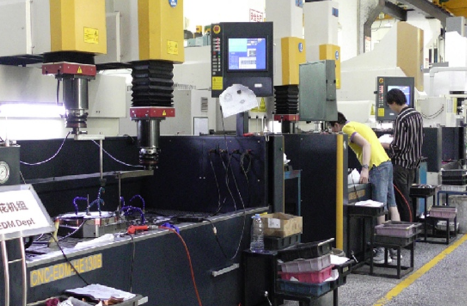
Maidder operates an advanced in-house tool room equipped with high-speed CNC machining centers and spark erosion (EDM) technology to meet the most demanding project requirements. Its precision injection mold development process integrates mold design, steel selection, machining, inspection, and trial validation to maintain consistent tooling accuracy.
The DFM Process and Engineering Change Notification Expertise
Every project at Maidder begins with a comprehensive design for manufacture (DFM) report. This is not a superficial check but a deep dive into the part’s geometry to ensure production stability. A notable example is the project for the HP printer base. During this project, Maidder managed an extensive engineering change notification (ECN) process that involved transitioning through multiple revisions, such as REV 4.9 to REV 12.1.
The technical modifications for this project included:
· Removing and adding steel in the cavity and core inserts to accommodate profile changes.
· Implementing specialized welding on lifters to ensure tool life was not compromised during part profile modifications.
· Creating new cavity plug inserts and sub-inserts to handle updated parting lines and release requirements.
· Ensuring 0.5mm release from the cavity and 1mm release from the core for optimal part ejection.
This level of detail highlights the ability to handle complex export mold standards while maintaining strict control over modification costs and lead times.
Validating Quality with the 1 Million Shot Guarantee
Durability is a non-negotiable requirement for high-volume export projects. Maidder provides a 1 million shot guarantee on its precision tooling by using high-grade tool steels such as P20 or fully hardened steels, combined with advanced valve gate hot runner systems. Whether the client requires DME standard mold tooling or HASCO tooling, the commitment to quality remains the same. Every tool is subjected to rigorous certification, including URS and ISO 9001 standards, supported by coordinate measuring machines (CMM) and optical measuring instruments to verify that every one of the mold components meets the specified tolerances.
Conclusion
The decision between DME and HASCO ultimately rests on the geographic requirements of the production facility and the specific needs of the product’s lifecycle. While DME standard mold tooling is essential for the North American market, HASCO standard mold tooling remains the metric benchmark for the rest of the world. By partnering with an experienced manufacturer like Maidder, clients ensure that their export mold standards are correctly selected and executed with the highest level of engineering precision.
Contact us to discuss your next precision tooling project and receive a professional DFM consultation.
FAQ
Q: What is the primary difference between HASCO standard mold tooling and DME standard mold tooling?
A: The main difference lies in the measurement system and regional dominance. DME standard mold tooling uses imperial (inch) measurements and is the standard for North American markets. HASCO standard mold tooling uses the metric system and is the preferred standard for European and most global markets outside the US.
Q: Can Maidder provide a DFM report for molds built to DME or HASCO standards?
A: Yes, Maidder provides detailed Design for Manufacture (DFM) reports for every project. This includes a deep analysis of part geometry, potential defects like shrinkage or sink marks, and recommendations for optimizing mold components to ensure the tool meets international export mold standards.
Q: Does Maidder offer a shot life guarantee on high-volume export molds?
A: Maidder offers a 1 million shot guarantee on all tool components for high-grade injection molds. This guarantee is supported by extensive planned maintenance programs and the use of premium tool steels and precision machining to meet strict tooling standards.
Q: Are mold components easily replaceable if I use HASCO tooling for my export project?
A: Yes, one of the biggest advantages of HASCO tooling is global interchangeability. Because HASCO is a modular system with universal part numbers, replacement mold components such as ejector pins, guide bushings, and cooling fittings can be sourced quickly from local suppliers in almost any country, excluding primarily the US imperial-based shops.
