

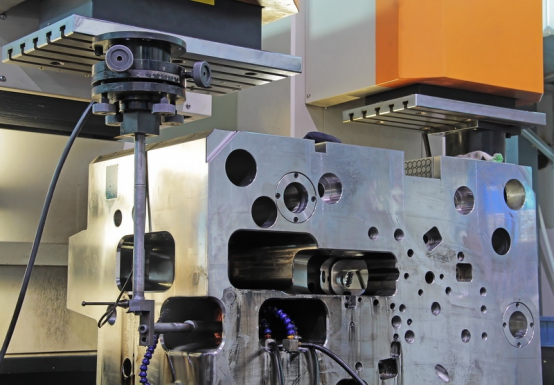
Choosing the right distribution system for molten plastic is one of the most critical decisions in plastic product development. The selection between a cold runner setup and a complex hot runner system directly impacts long-term profitability, cycle times, and aesthetic consistency. Maidder provides an engineering-led perspective on these technologies, ensuring that brand owners and OEM/ODM buyers select the most efficient path from DFM to mass production.
Understanding the Runner in Injection Molding
The runner in injection molding acts as the primary highway for molten polymer to travel from the machine nozzle to the mold cavities. This delivery system ensures that every part in a multi-cavity mold receives the same volume of material at consistent pressures. Without a properly designed runner, products often suffer from common manufacturing defects such as shrinkage, air marks, or uneven surface gloss.
Maidder utilizes advanced moldflow analysis during the early design phases to evaluate how different runner layouts affect material flow. This engineering-led approach helps identify potential risks before a single piece of steel is cut, reducing development costs for complex projects.
What is a Cold Runner Mold and Why is it Still Used
A cold runner mold represents the traditional method of plastic delivery. In this configuration, the plastic within the runner cools alongside the actual product and is ejected as a solid piece during every cycle. This results in a physical "tree" of plastic that must be manually or automatically removed and potentially reground.
There are several reasons why this technology remains relevant in modern technical injection molding:
· Lower initial tooling making costs compared to heated systems.
· Easier maintenance and simplified mold construction for two-plate or three-plate designs.
· Faster color changes since the entire runner system is removed with every shot.
· Ideal suitability for heat-sensitive materials that might degrade if kept molten for long periods.
However, the primary drawback involves material waste. For high-volume production, the accumulated cost of scrap plastic often outweighs the initial savings in mold construction.
How a Hot Runner System Enhances Mass Production
A hot runner system utilizes an internally or externally heated manifold to keep the plastic in a molten state throughout the production process. Selecting the right runner structure is only one part of successful tooling development. The mold design, manufacturing accuracy, and validation process also directly influence final part quality. Learn more about OEM/ODM tooling and molding process.Unlike the cold variant, only the material inside the mold cavity solidifies. This allows for hot runner injection molding, which yields a "runnerless" part, eliminating the need for secondary trimming operations.
Maidder specializes in high-precision hot runner mold construction for global brands. In high-volume projects, the ability to use expensive engineering plastics without generating scrap is a critical advantage for brand owners focused on sustainability and cost-efficiency.
Why Hot Runner Injection Molding Delivers Superior Part Quality
Part quality is often the deciding factor for technical sourcing and engineering buyers. A hot runner mold provides superior control over pressure transmission into the cavity. Because the plastic remains molten up to the gate, the machine can apply holding pressure more effectively, which minimizes shrinkage and sinking in thick-walled products.
Maidder engineers often recommend heated systems for products with strict aesthetic requirements. For example, during the modification of printer base components for HP, the DFM process focused on precise gate placement to avoid weld lines and air marks. Hot runners allow for "valve gating," a technique where a physical pin opens and closes the gate. This leaves a virtually invisible gate mark, essential for high-end consumer electronics and medical device housings.
Production Differences in Cycle Times and Scale
The efficiency of mass production is tied to the scalability of the runner system. For multi-cavity molds with high cavitation—such as 16, 32, or 64 cavities—a hot runner system is the only practical choice. Balancing the flow across so many cavities in a cold runner system is exceptionally difficult and often leads to unstable dimensions.
Maidder operates facilities in both Dongguan and Cambodia to provide supply chain flexibility for these high-scale projects. By combining China-based engineering expertise in complex tooling with the cost-effective production capacity of Cambodia, Maidder helps buyers mitigate trade risks. High-speed automated production is much easier to implement with hot runners because there is no need for robotic arms or manual labor to manage the removal and sorting of waste runners.
Engineering-Led Support for Complex Tooling
Choosing between these systems requires more than just a preference; it requires a deep dive into the specific part geometry and material properties. Maidder offers a one-stop service that includes detailed DFM reports and structural design optimization.
In the case of complex modifications, such as adding plastic areas or modifying inserts, Maidder utilizes CNC machining, EDM, and laser welding to maintain mold integrity. For projects requiring multi-cavity hot runner setups, Maidder ensures the implementation of proper cooling water channels—such as D6mm channels—to maintain thermal stability across the manifold and the cavities. This technical response ensures that samples and mass production units remain consistent.
Conclusion
The choice between a hot runner and a cold runner mold is a strategic decision that balances upfront capital with long-term operational efficiency. While the cold runner remains a reliable and cost-effective solution for prototypes and low-volume testing, the hot runner system is the preferred engine for high-volume, precision-driven mass production. By partnering with an engineering-driven manufacturer like Maidder, it can leverage DFM expertise and dual-center production to reduce development risks and maximize product quality.
To optimize your next precision plastic project, contact Maidder for a free technical consultation.
FAQ
Q: Does a hot runner mold require more maintenance than a cold runner mold?
A: Yes, because a hot runner system involves electrical components, heating elements, and manifolds, it requires a more rigorous maintenance schedule to prevent clogging or drooling. Maidder provides full maintenance support for all in-house molds to ensure production continuity and prevent black spots caused by material carbonization.
Q: Can Maidder convert a cold runner mold into a hot runner system?
A: Converting an existing mold is sometimes possible but often requires significant modification to the mold base to accommodate the manifold and wiring. It is generally more cost-effective to decide the runner type during the initial DFM phase to ensure the mold structure is optimized for hot runner injection molding from the start.
Q: How does hot runner injection molding affect color changes?
A: Color changes are generally slower in a hot runner mold because the manifold contains a volume of molten plastic that must be completely purged. If your project requires frequent color changes in small batches, a cold runner mold might offer better operational flexibility despite the material waste.
