

To prevent injection molding defects in OEM plastic parts, teams need to control the project before production begins: review the design for moldability, choose suitable resin, build the right mold structure, validate process settings, and measure parts consistently during production. Defect prevention is strongest when engineering, tooling, molding, and quality control share the same data instead of solving problems after parts fail inspection.
Why Defect Prevention Starts Before Production
Many OEM plastic parts fail because the first risk was hidden in the design file. A thick boss, sharp corner, weak draft angle, long flow path, or poorly placed cosmetic surface can create defects even when the molding machine is well controlled.
For this reason, early engineering review is more valuable than late troubleshooting. Maidder's design service focuses on injection moulding design from concept to final design, using 3D models and simulations to refine product details before production.
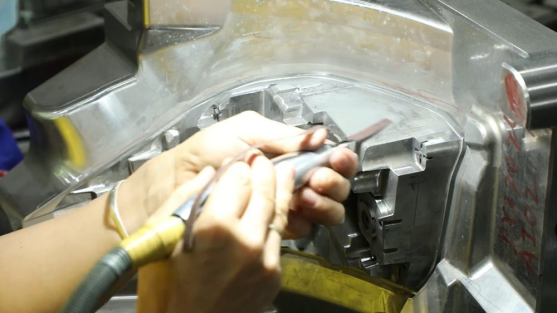
This approach is especially important for brand owners, product developers, and OEM teams that need both appearance and function. A small appliance housing may need clean texture and stable assembly gaps, while a hard cooler component may need thicker structures, sealing features, and dependable strength. Different applications create different risks, but all of them benefit from early manufacturability review.
Design Reviews That Prevent Molding Problems
Wall Thickness, Ribs, Bosses, and Draft Angles
Wall thickness should be as uniform as the product function allows. Sudden changes in thickness make cooling uneven, creating sink marks, internal voids, stress marks, and warpage. If a thick area is unavoidable, coring, rib redesign, or gate support may be needed to reduce shrinkage problems.
Ribs and bosses should add strength without becoming hidden masses of plastic. Draft angles should also match the part surface, texture, depth, and ejection direction. Without enough draft, the part may drag against the cavity and show stress whitening, scratches, or deformation after ejection.
Gate Location, Venting, and Flow Balance
Gate location affects how the melt fills the cavity, where weld lines appear, how pressure packs thick sections, and where cosmetic marks may form. A gate near a heavy section can improve packing, but it must also avoid creating visible jetting or flow marks on important surfaces.
Venting is just as critical. Trapped air can cause burns, gas marks, short shots, and weak weld lines. For complex injection mold design, venting should be planned around end-of-fill zones, ribs, shutoffs, insert areas, and surfaces where two melt fronts meet.
Material Choices That Reduce Defect Risk
Material selection affects flow, shrinkage, moisture sensitivity, toughness, surface finish, and dimensional stability. Maidder works with PC, ABS, PP, TPE, POM, Nylon, and filled or blended materials, giving engineers room to match material behavior with product needs.
Moisture-sensitive materials must be dried correctly to reduce silver streaks, splay, bubbles, and brittleness. Filled materials may improve stiffness or heat resistance, but they can also affect flow direction, weld line strength, tool wear, and surface appearance. A material that looks ideal on a datasheet still needs to be considered through the lens of the actual part geometry and production process.
Tooling Decisions for Stable OEM Plastic Parts
The mold should make quality repeatable, not merely make the first sample possible. Maidder's tooling service includes an in-house tool room with high-speed CNC machines for milling and spark erosion, supporting tooling from aluminium prototype tools to P20 and fully hardened multi-cavity tools with valve gate hot runner systems.
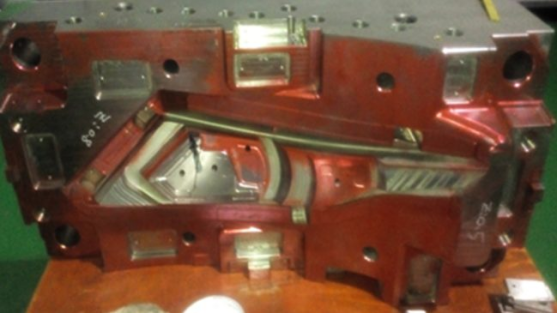
For OEM plastic parts, tooling decisions should match expected volume, part geometry, surface requirements, and maintenance needs. A prototype tool may be suitable for early validation, while a fully hardened multi-cavity tool may be more appropriate for higher-volume production. Hot runner or valve gate systems can improve material flow and cycle efficiency in suitable applications, but they require careful thermal control.
Mold fitting, polishing, cooling layout, parting line quality, and insert alignment all affect defect prevention. Poor surface finishing can make release difficult, while weak cooling design can keep shrinkage unstable. A good mold is a production asset because it supports repeatable filling, packing, cooling, ejection, and maintenance.
Process Control for Stable Plastic Injection Molding
Process control turns a capable mold into reliable production. Key parameters include melt temperature, mold temperature, injection speed, transfer position, holding pressure, holding time, cooling time, and material preparation. These settings should be established through trial data and adjusted according to part behavior.
Maidder's injection moulding capability includes insert molding, two shot molding, foaming and injection molding, and production from low volume to high volume with robots and automation. That range is useful because different OEM products may require molded inserts, multi-material functions, assembly preparation, or controlled secondary operations.
Stable process windows also prevent overcorrection. Increasing injection velocity can aid in short shots, but on the other hand, it can cause burning marks if there is no venting available. Higher holding pressure will eliminate sink marks, but on the contrary, it can cause flashing or increased molded-in stress.
Quality Inspection That Catches Problems Early
Inspection should connect cosmetic review with dimensional and functional validation. Surface checks can catch flash, flow marks, black spots, and burn marks, while dimensional inspection confirms whether shrinkage and warpage are under control. Functional checks then confirm whether the molded part assembles, seals, clips, rotates, or carries load as intended.
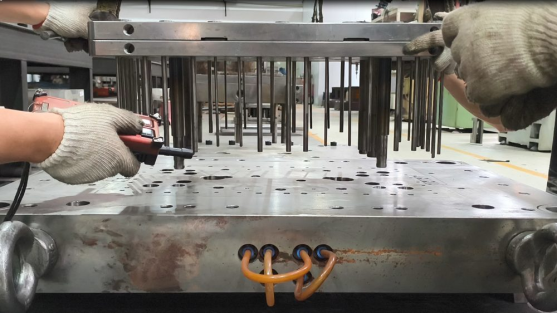
Maidder's quality resources include CMM measurement, optical measuring equipment, and Minitab for dimensional and statistical analysis. Component DFM, APQP, MSA, FMEA, PPAP, process capability analysis, functional and dimensional assessment, and in-process testing create a more disciplined route from early risk review to stable production. These methods matter because defect prevention depends on repeatable evidence, not only visual sorting.
Choosing an Injection Molding Partner for Better Results
The right injection molding partner should be able to explain why a defect may happen before the mold is made. Strong partners ask about materials, tolerances, cosmetic surfaces, assembly requirements, packaging, testing, and expected production volume. They also know when to recommend a design change rather than forcing the molding process to compensate for a weak geometry.
For OEM and ODM projects, Maidder is relevant because its services connect product design, tooling, moulding, assembling, OEM Cambodia, and CNC machining. Its Cambodia capability adds plastic injection moulding, blow molding, roto molding, foaming, assembly, two-colour printing, and packing for suitable production routes. That broader workflow helps teams manage both engineering risk and production continuity.
How Maidder Connects Engineering and Production
Defect prevention works best when the same project logic carries from early design to tooling validation and mass production. A DFM concern about wall thickness should inform gate design; a moldflow concern about trapped air should inform venting; a trial issue with warpage should inform cooling and inspection planning.
Maidder's value is not only that it can mold plastic parts. Its stronger role is helping OEM teams align design decisions, mold construction, molding parameters, inspection methods, and downstream assembly. That alignment reduces the chance that a project passes sampling but becomes unstable when production volume increases.
Conclusion
Preventing injection molding defects in OEM plastic parts requires a connected system: moldable design, suitable material, precise tooling, controlled plastic injection molding, and measurable quality control. When these steps are handled separately, defects often reappear in new forms; when they are handled together, the project becomes easier to stabilize.
Maidder brings design, tooling, molding, assembly, and quality resources into one production path for custom plastic products.
Talk with Maidder about building defect prevention into your next OEM plastic part before tooling decisions are locked.
FAQ
Q: What is the best way to prevent injection molding defects?
A: The best approach is to start with DFM, then validate tooling, material choice, process settings, and inspection criteria together. Defects often come from multiple causes, so prevention works better when design, mold, resin, molding parameters, and quality checks are reviewed as one system.
Q: Why do OEM plastic parts need DFM before tooling?
A: OEM parts often have cosmetic, structural, assembly, and tolerance requirements at the same time. DFM helps identify wall thickness issues, weak draft, difficult ribs, gate concerns, and venting risks before steel is cut, reducing rework and improving the chance of stable production.
Q: Can process settings alone solve molding defects?
A: Sometimes, but not always. Process changes can reduce short shots, sink marks, or surface defects when the mold and design are sound. If the root cause is poor geometry, weak venting, unbalanced cooling, or unsuitable resin, machine adjustments may only hide the issue temporarily.
Q: What quality checks matter for molded plastic parts?
A: Important checks include surface inspection, dimensional measurement, functional testing, material verification, and process capability review. For technical parts, CMM or optical measurement, statistical analysis, and structured methods such as FMEA or PPAP can help connect production data with defect prevention.
