

ODM plastic manufacturing turns a product idea into production-ready plastic parts by combining product development support, material and design review, mold making, sampling, validation, and mass production within one coordinated process. Its real value lies in continuity: design decisions remain connected to tooling, part quality, assembly requirements, and production conditions as the product moves from concept to scale.
What ODM Plastic Manufacturing Includes
A plastic product ODM project involves more engineering participation than build-to-print manufacturing. The manufacturer may support concept refinement, component design, material selection, 3D modeling, tooling, molding, and downstream assembly, while the product team defines the intended function and confirms critical specifications.
ODM Versus Build-to-Print Manufacturing
Build-to-print manufacturing begins with released drawings, material specifications, inspection criteria, and a production-ready design. Plastic product ODM starts earlier, when the concept still needs engineering work or when several molded and assembled components must be developed as one finished product.
The manufacturer therefore helps translate functional, visual, and production requirements into a stable product definition.
When Product Development Support Adds Value
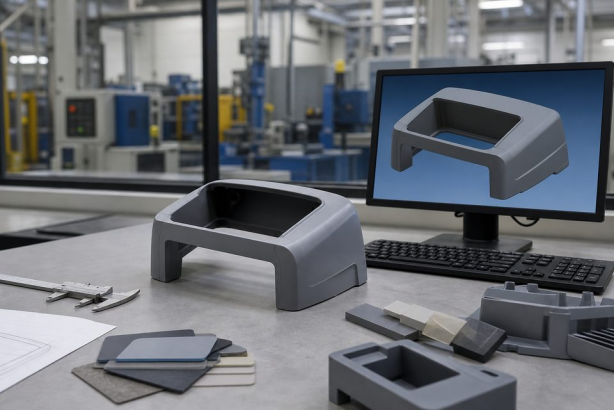
Early product development support is especially useful when a project begins with a concept sketch, appearance model, early CAD file, or working prototype that has not yet been optimized for molding. Engineering review can reveal how design choices affect mold complexity, ejection, surface appearance, assembly, material usage, and repeatability.
Maidder's product design and engineering support covers the path from initial concept and material selection to in-house 3D modeling and final design. The depth of support naturally changes with design maturity and product complexity.
Product Development Support Before Mold Making
Convert Requirements Into a Manufacturable Design
A well-defined ODM brief describes the product's function, appearance priorities, use environment, assembly interfaces, target quantity, packaging needs, and critical dimensions. It also separates fixed requirements from areas where engineering alternatives remain possible.
These inputs guide decisions on wall thickness, draft, ribs, undercuts, parting lines, gates, and ejection.
Review Materials and 3D Models
Material selection connects end-use requirements with molding behavior, cost, availability, appearance, and assembly processes. Maidder identifies processing capability for PC, ABS, PP, TPE, POM, Nylon, and filled or blended materials, while the final choice depends on the product's mechanical, thermal, chemical, and visual requirements.
The 3D model should also be checked against mating parts, fasteners, inserts, electronics, seals, and packaging constraints.
Use DFM as an Approval Gate
A DFM review turns manufacturing concerns into specific design decisions. Typical topics include wall-thickness transitions, shrinkage risk, warpage, sink marks, air traps, weld lines, draft, texture release, gate visibility, ejector marks, and tolerance priorities.
The DFM output should separate required changes from optional improvements and record the geometry, resin, surface, dimensions, and sample criteria approved before steel cutting.
Mold Making for ODM Plastic Parts
Match the Tool to Volume and Complexity
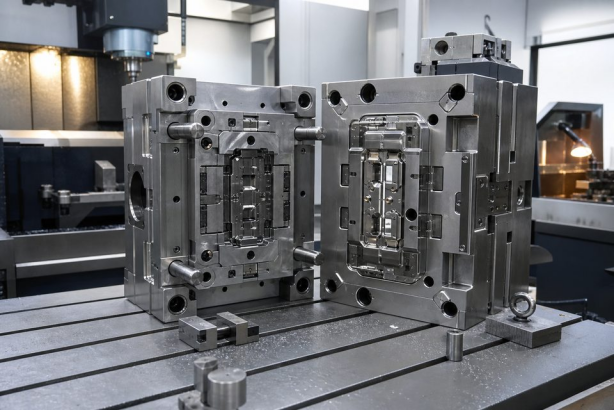
Mold making is the point where product geometry becomes a repeatable production system. Cavity count, tool material, runner strategy, slides, lifters, unscrewing mechanisms, collapsible cores, and cooling design all reflect the geometry, expected production demand, maintenance approach, and part-quality priorities.
Prototype tooling supports early learning, while hardened multi-cavity tools suit stable higher-volume demand. Tool structure influences cycle time, handling, maintenance, and consistency.
Maidder uses high-speed CNC milling and spark erosion, with tooling options ranging from aluminum prototype tools to P20 and fully hardened multi-cavity tools. These molding and tooling capabilities connect the released part design with a tool concept shaped by geometry and expected production demand.
Approve the Tooling Package Before Steel Cutting
The tooling package should define the layout, cavity count, steel, runner, gates, parting line, ejection, cooling, inserts, wear components, and machine interfaces.
Mold ownership, storage, maintenance, engineering changes, transfer conditions, spare components, and service records support long-term production continuity.
Manage Sampling as a Controlled Learning Stage
Initial samples provide evidence on dimensions, assembly, function, appearance, molding behavior, and deviations from the released specification.
Any change should remain linked to its reason, drawing revision, tooling modification, and updated sample status.
Moving From Samples to Mass Production
Confirm Production Readiness
Production readiness means approved samples can be reproduced using one defined baseline for drawings, material, appearance, inspection, dimensions, assembly, packaging, and nonconforming parts.
Inspection depth should reflect risk, with critical interfaces and functional dimensions receiving the closest attention.
Scale Without Losing Specification Control
Mass-production consistency can be affected by material substitutions, process changes, mold maintenance, cavity variation, rework, and packaging changes.
Change control, batch traceability, production records, dimensional verification, and acceptance criteria make deviations easier to investigate.
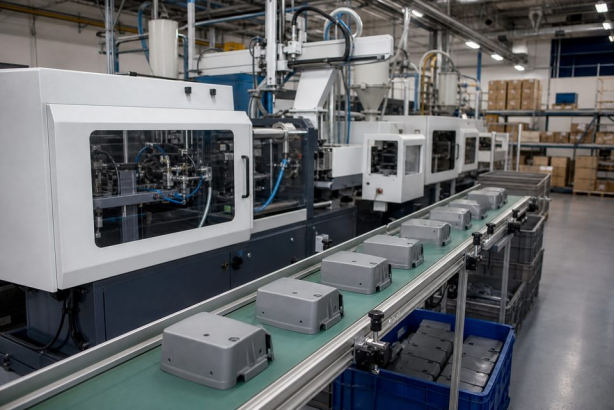
Maidder states that its molding operation processes multiple engineering and commodity plastics and supports both lower and larger production volumes. Its injection molding and mass production services can be evaluated together with the approved tool, inspection requirements, and downstream operations for a project-specific production plan.
Plan Assembly, Packing, and Delivery
An ODM product may combine molded parts, sourced components, electronics integration, printing, foaming, assembly, packing, and dispatch preparation within one coordinated flow.
Packaging, labels, carton configuration, spare parts, and shipment documents should be considered early to avoid late design changes.
What Holds the ODM Process Together
Engineering and Tooling Coordination
A reliable ODM process connects design revisions, tooling decisions, molding observations, and technical approvals throughout development.
Maidder combines design, 3D modeling, mold making, injection molding, assembly, and packing according to each project's technical scope.
Capacity and Process Fit
Stable production depends on machine fit, mold dimensions, auxiliary equipment, capacity, maintenance, material handling, inspection resources, and scheduling.
Tooling, molding, sourced components, assembly, packing, testing, and logistics work best as one connected production system.
Long-Term Product Continuity
CAD data, mold records, engineering changes, inspection history, maintenance, and replacement components preserve continuity after the first production run.
Confidentiality, data control, replacement tooling, production continuity, and end-of-program transfer support long-term product stewardship.
Conclusion
Successful ODM plastic manufacturing connects product development support, DFM, mold making, sampling, validation, and mass production through one approved production baseline.
Maidder supports coordinated production of ODM plastic parts, with each program shaped by its geometry, material, forecast, and acceptance requirements.
FAQ
Q: What information helps start an ODM plastic manufacturing project?
A: The starting information normally includes the product's intended function, use environment, appearance priorities, target quantities, critical dimensions, assembly interfaces, material preferences, packaging needs, and any existing sketches, CAD files, or prototypes. It also helps to identify which requirements are fixed and where engineering alternatives remain possible during product development.
Q: How is plastic product ODM different from ordering build-to-print plastic parts?
A: Build-to-print manufacturing starts with a production-ready drawing and specification. Plastic product ODM involves deeper manufacturer participation in concept refinement, design, material evaluation, manufacturability, tooling, and production planning. Design ownership, approval authority, mold ownership, engineering-change control, and final technical files still need to remain clear throughout the project.
Q: What should be approved before mold making begins?
A: Approve the released 3D model and drawings, resin basis, surface requirements, critical dimensions, parting line, gate and ejection expectations, mold concept, cavity count, sample acceptance plan, and commercial ownership terms. Any unresolved item should be recorded with an owner and due date. Cutting steel before these decisions are closed can increase modification risk.
Q: How do ODM plastic parts move safely into mass production?
A: Approved samples form the production baseline alongside defined inspection methods, critical characteristics, material controls, cavity identification, assembly checks, packaging requirements, traceability, and change approval. Capacity fit and mold maintenance also influence consistency. Mass production should begin after open sample issues and tooling changes have been documented and formally accepted.
